For obvious reasons, we are not at liberty to discuss the most recent financial charges levied towards Manchester City by the Premier League, owing to potential appeals and processes.
However, we can talk about the first time the Citizens were caught up in financial impropriety – well over a century ago.
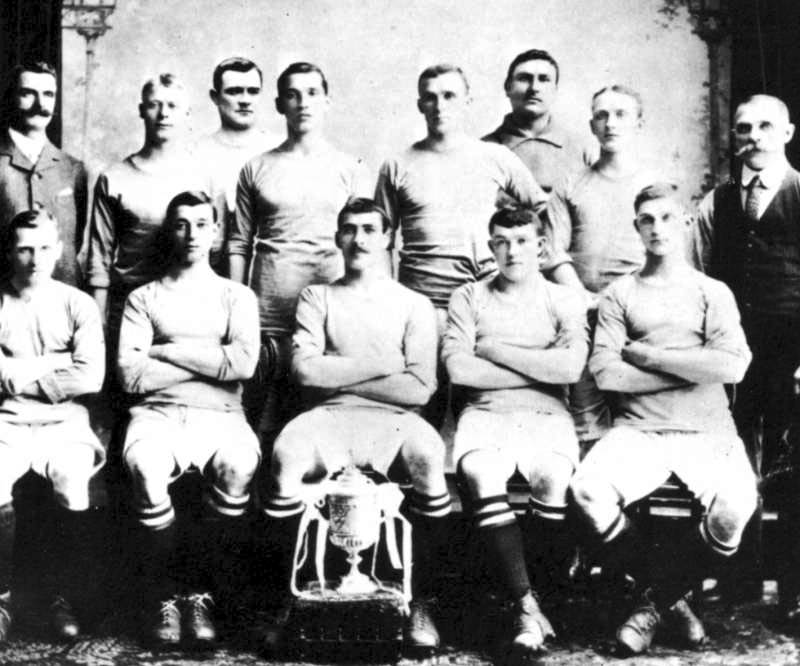
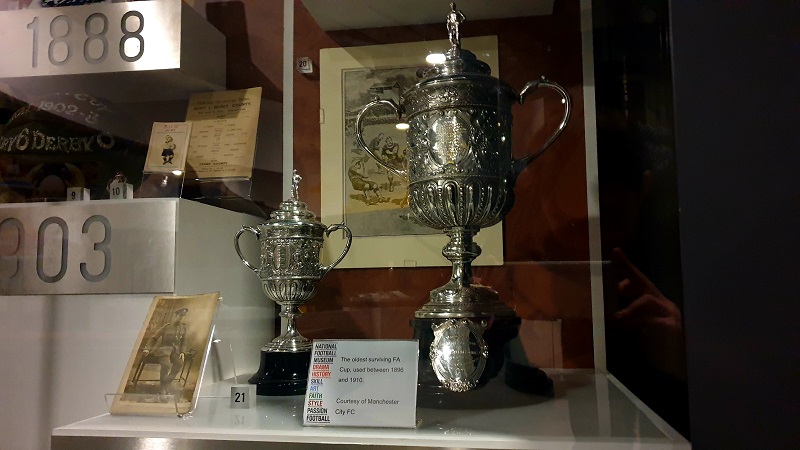
In 1904, City lifted the FA Cup for the first time, defeating Bolton Wanderers at the Crystal Palace. Nine of those players, including match winner Billy Meredith, were still at the club the following season. They had finished as league runners-up in ’04, and as expected were challenging again the following year.
Going into the final game, City still had the chance to lift their first top-flight title, but needed to beat Aston Villa down in Birmingham. They were unable to do so, the hosts winning a tempestuous game 3-2 and the trophy ultimately heading north to Newcastle United.
City goalscorer Sandy Turnbull got into a fight with Villa’s experienced half-back Alex Leake: just one of the violent altercations during (and after) the game. The resulting investigation into this behaviour by The FA uncovered something far more insidious: allegations of attempted bribery.
Meredith had purportedly offered Leake £10 to throw the match in City’s favour: Leake merely laughed it off. However, this exchange was overheard by an anonymous source and was duly referred to The FA. They found Meredith guilty of attempted match-fixing, fined him £100 and suspended him for 18 months.
However, the story doesn’t end there.
During Meredith’s ban, Manchester City also suspended his wages. When Meredith kept asking for payment, his club eventually reported him to football’s governing body. In response, Meredith had an open letter published in the press, stating that he was only acting on the instruction of others, implicating manager Tom Maley in the scandal.
He went on to air the club’s even dirtier laundry: that players had been getting paid beyond the maximum wage – and for some time, too.

Another investigation showed that City had been paying out very generous bonuses to players, well in advance of what was acceptable. The FA ultimately ruled: “it is now proved that the club had for years systematically broken the rules by very unscrupulous means.”
One newspaper wrote that that the club “had bought the English Cup”, referring to the side that had lifted the FA Cup two years prior.
The outcome was devastating for City. The club was whacked with a hefty £900 fine and some of its directors banned for siphoning funds away from the coffers, but even more impactful, every one of City’s 17 players was hit with an 18-month ban.
This inevitably led to the disssolution of that grand City team at auction. Four of their top players – Meredith, Turnbull, Herbert Burgess and Jimmy Bannister – all moved to rivals Manchester United for next to nothing. Meredith, arguably City’s most talented player, departed on a free transfer.
That United team went on to enjoy its first taste of success, winning two titles in 1908 and 1911, and the first of their thirteen FA Cups in 1909. Both Meredith and Turnbull were in the side for that cup sucess, with the latter scoring the game’s only goal.
City, meanwhile, had to rebuild their squad from scratch. They avoided relegation by five points but looked to be moving in the right direction again the following season when they finished third, albeit nine points adrift of champions (and neighbours) United.
However, they failed to mount a sustained title challenge after that, even briefly dipping down into the Second Division for one season. Not until 1921 would they come close again, finishing as runners-up to Burnley, and would have to wait until 1936 to lift their first top-tier title.