
The National Football Museum is proud to announce that England International and football pioneer George Eastham will be posthumously inducted into the National Football Museum Hall of Fame.
The induction will take place at Stoke City’s bet365 Stadium during their Championship match against Queens Park Rangers on Saturday 17th January.
The National Football Museum Hall of Fame aims to celebrate and highlight the achievements of those who have made an outstanding contribution to English football. The Hall of Fame also acknowledges and champions the careers of those that go beyond just impact on the pitch.
Eastham’s induction recognises not only his outstanding playing career at club and international level, but also his remarkable off-field contributions that helped shape the modern game.
Born in Blackpool in 1936, Eastham emerged as one of English football’s most gifted inside-forwards. After breaking through at Newcastle United and later starring for Arsenal, Eastham cemented his legendary status during his time with Stoke City, where he became an integral part of Tony Waddington’s iconic side.
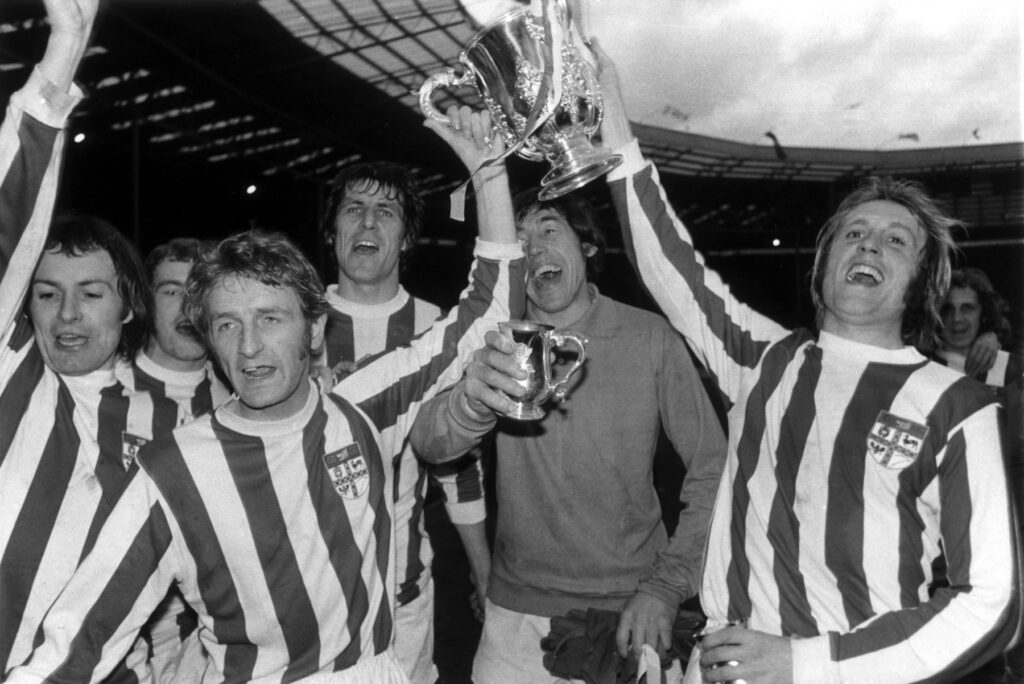
One of the defining moments of his club career came in 1972, when Eastham scored the winner in the 73rd minute in the League Cup final, securing Stoke City’s first major trophy. His clinical finish delivered a historic moment still cherished by Potters supporters more than half a century later.
Internationally, Eastham won 19 caps for England between 1963-1966 as well as being part of the 1966 FIFA World Cup-winning squad, making a valued contribution throughout the campaign and earning his place among the nation’s footballing greats.
Beyond the pitch, Eastham played a pivotal role in transforming players’ rights in England. His successful challenge to the retain-and-transfer system was a landmark moment in football, paving the way for fairer contracts and greater freedom of movement for players.
After retiring in 1974, he briefly managed Stoke City before moving to South Africa.
Eastham continued to influence the game internationally. His coaching and development work in apartheid-era South Africa saw him support and work with football teams across the country, contributing to the sport’s growth in challenging social and political conditions. His efforts demonstrated a lifelong commitment to using football as a force for opportunity and positive change.
In recognition of his contributions to football, Eastham was awarded an OBE in 1973. His role in securing players’ rights ensures he holds an important place in the history of the PFA.
CEO of the National Football Museum Tim Desmond said: “George Eastham was not only a fantastic footballer but a true pioneer whose bravery reshaped the game for generations to come. From his part in the 1966 World Cup squad to his historic League Cup victory with Stoke City, unprecedented success followed his career.
“Off the pitch, his work for improved player welfare, and use of football for good are a shining example of what the Hall of Fame represents. We are honoured to induct George and ensure his legacy is celebrated and remembered.”
Stoke City’s Sporting Director, Jonathan Walters, added: “George’s legacy for his contributions on and off the pitch will stand the test of time, and he will always be remembered as a true great. His goal in the 1972 League Cup final will remain iconic in the Potteries and it’s a moment which, to this day, is played on our home matchdays to remind supporters of all generations of that historic achievement.
“We are looking forward to welcoming members of George’s family to our first league fixture of the New Year when he will be formally inducted into the National Football Museum’s Hall of Fame.”