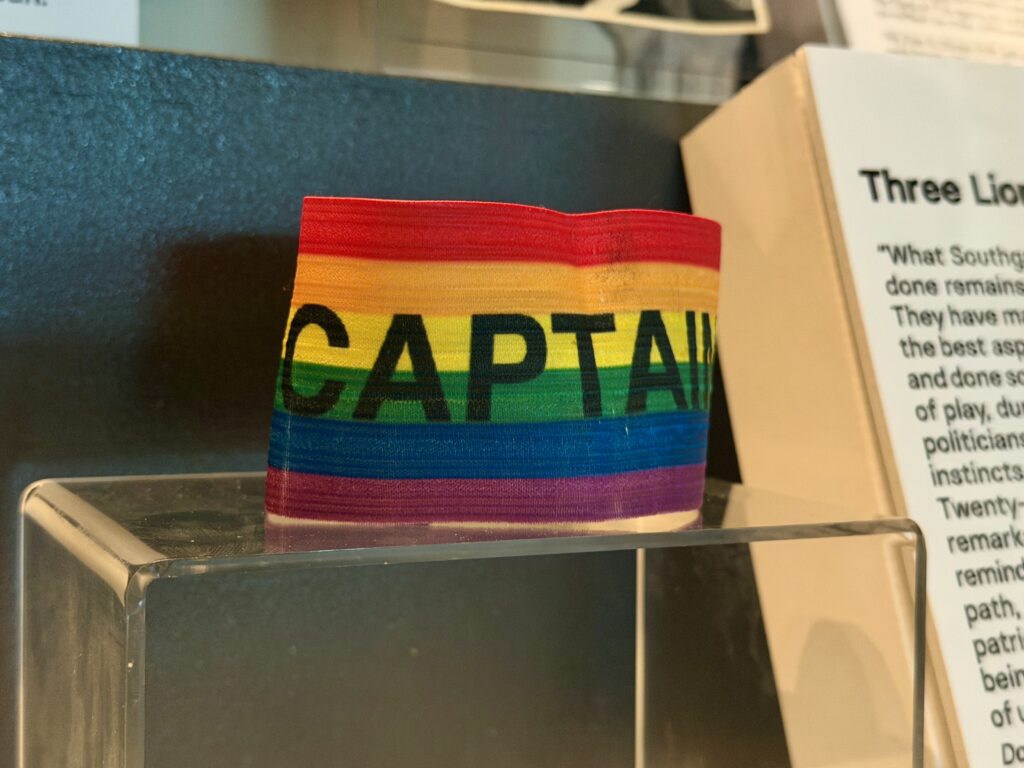
The story of two England captain’s armbands worn at major international tournaments, the purpose behind their creation and the controversial responses from football’s governing bodies…
At Euro 2020, skipper Harry Kane wore this armband during England’s Round of 16 win over Germany – but the presence of the rainbow was almost prohibited by UEFA.
It might not have made it onto the pitch at all were it not for Kane’s counterpart, German goalkeeper Manuel Neuer.
The veteran stopper wore a rainbow armband in previous rounds in support of LGBT+ communities, against the backdrop of Hungary passing anti-LGBT laws during the tournament.
Neuer was under investigation from the European body, but they ultimately found that “the armband has been assessed as a team symbol for diversity and thus for a ‘good cause”.
This paved the way for Kane to emulate his fellow captain and wear this armband during the knockout clash. The Three Lions would go on to win 2-0 at Wembley, with Kane himself sealing the win four minutes from time.
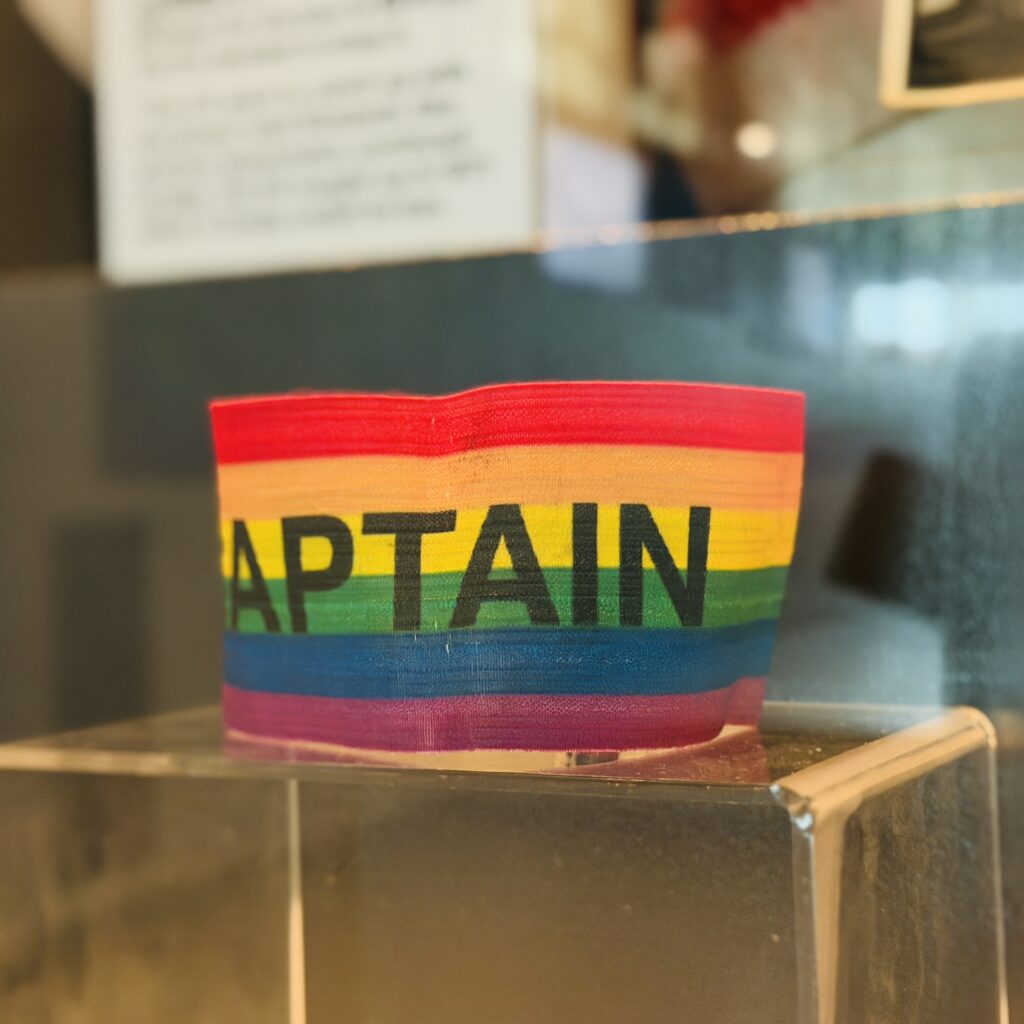
Two days before England and Germany met in the knockouts, Netherlands skipper Gini Wijnaldum wore a rainbow armband against the Czech Republic – with the game hosted at the Puskas Arena in Budapest.
This marked the first time that the OneLove armband, created to promote inclusion and challenge discrimination, was worn on the international stage – but not the last.
It made further appearances at the Women’s EUROs in the summer of 2022, with skippers – including Lionesses centre-half Leah Williamson – wearing the heart-shaped rainbow design.
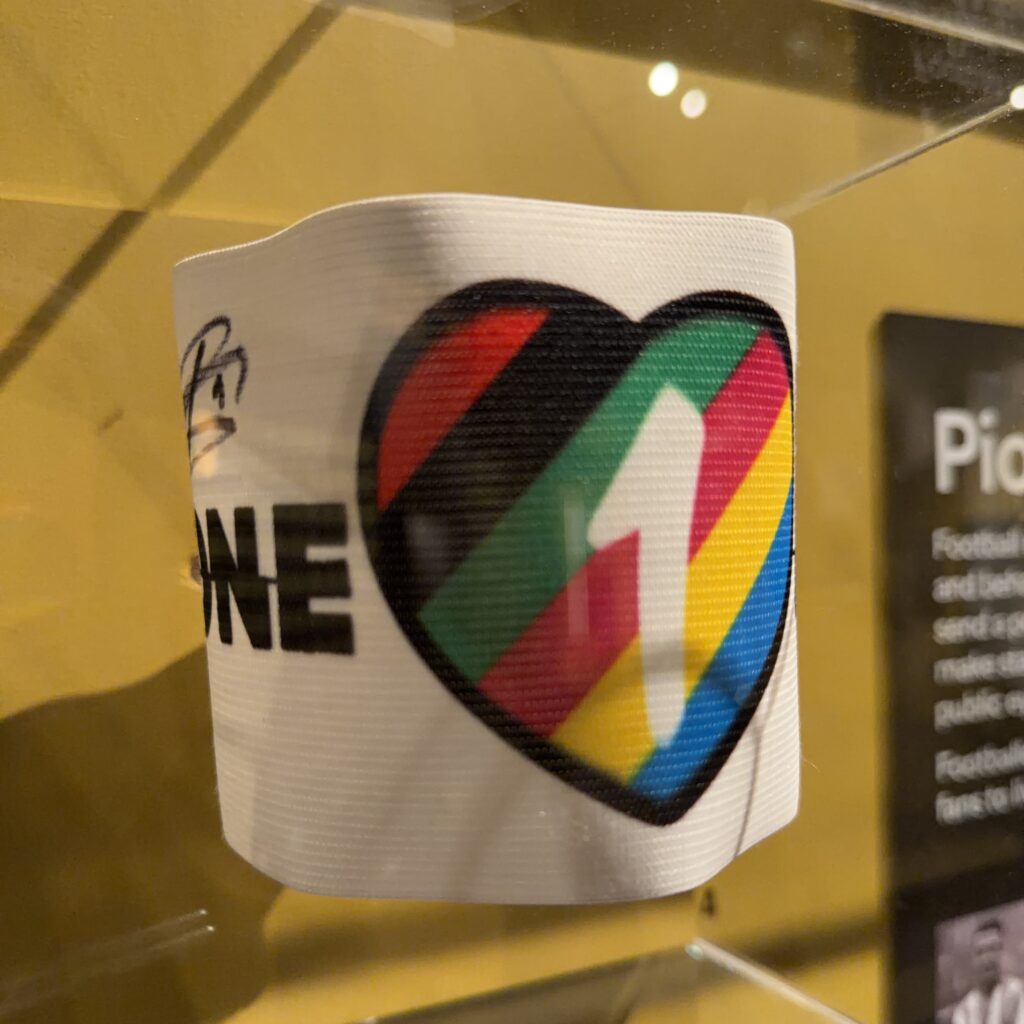
Eighteen months later, Harry Kane looked set to follow suit at the 2022 World Cup – only to be controversially denied by FIFA.
The perceived promotion of LBGT+ causes and values was deemed a far more sensitive subject in Qatar, where anti-LGBT laws had been in place for almost a century.
England were amongst seven nations supporting the cause, and were willing to pay any fines for breaching kit regulations.
However, FIFA took the extraordinary move of threatening to issue an immediate booking to any captain wearing said armband. This put team captains at greater risk of dismissal during the game – and In theory could have led to an accumulated one-match suspension just for taking the decision to wear it.
With the tournament fast approaching and draconian sporting penalties looming, those nations ultimately backed down. The FA called FIFA’s intervention “unprecedented” and expressed their disappointment at the decision.
At the most recent World Cup in North America, the armband featured FIFA’s own prescribed messaging: “Football Unites the World”.