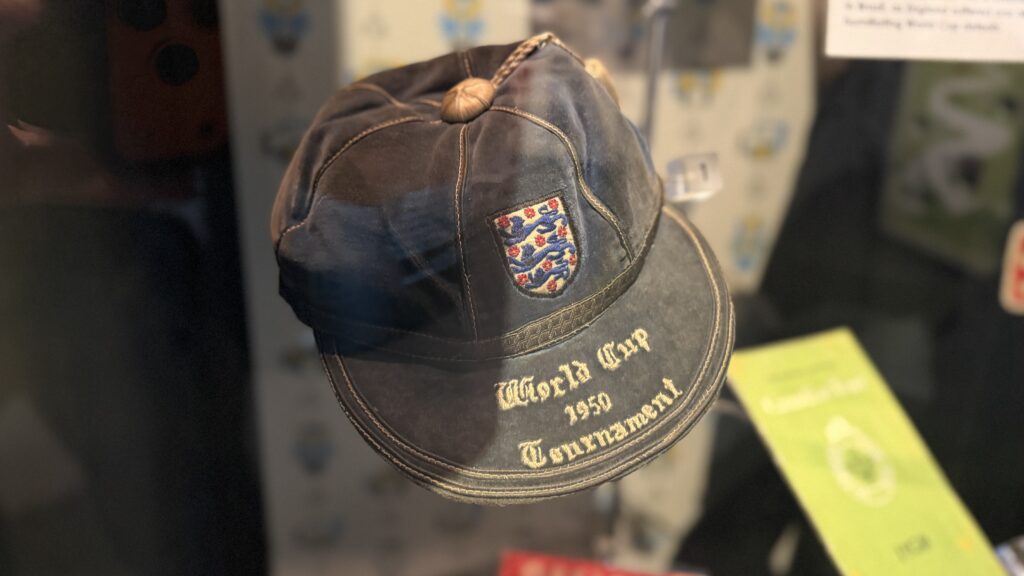
Did you know that Spain were actually the first team to knock England out of a World Cup?
Uruguay famously lifted the first Jules Rimet Trophy, but England, codifiers of the beautiful game, were nowhere to be seen. In fact, they were absent from the first three tournaments before the outbreak of war.
The FA, along with its Scottish, Welsh and Irish equivalents, had all withdrawn from FIFA two years before the first World Cup game even kicked off, in dispute with the governing body over the payment of players to participate in Olympic football (FIFA sought remuneration for players, the Home Nations were against it).
When The FA belatedly chose to participate in the World Cup, it was widely believed that they would comfortably bring home the trophy. The squad boasted some of country’s biggest names, particularly in attack: Newcastle’s Jackie Milbunr, Blackpool’s Stan Mortensen, Preston North End legend Tom Finney and Boro wonder boy Wilf Mannion were all part of the travelling side.
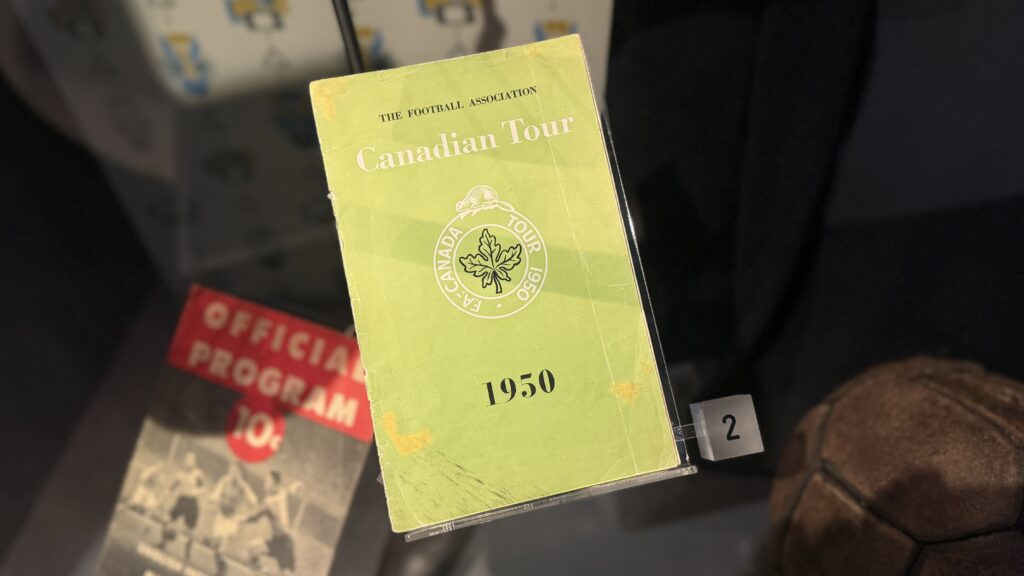
Unsurprising was the inclusion of another Blackpool forward, Stanley Matthews – but he almost missed out entirely. The 35-year-old was sent to Canada as part of a goodwill tour, and only after impressing there did he receive a call-up, making the gruelling 28-hour journey across continents to join up with the squad.
England’s preparation was nothing short of chaotic. A penny-pinching approach to travel and accommodation saw England fly out to Brazil relatively late, warming up at Wembley and Dulwich Hamlet – hardly a sufficient facsimile for the warmer climes of Rio.
While in the Brazilian capital, the squad endured stifling heat, inappropriate hotel conditions, a raucous reception (particularly in the evenings) and, initially, illness-inducing cuisine.
Despite a lack of acclimatisation time, England comfortably saw off Chile in their opening fixture at the Maracana, Wilf Mannion and Stan Mortensen on the scoresheet. Little did they know that abject humiliation awaited them just four days later.
On a substandard Belo Horizonte pitch, it was thought that England’s goal tally against the amateur USA side would figuratively resemble a cricket score.
Walter Winterbottom’s side dominated possession and rattled the woodwork a number of times – but failed to find the back of the net. A forward line comprising of Finney, Mannion, Mortensen, Wolves’ Jimmy Mullen and the mercurial Roy Bentley found goalkeeper Frank Borghi – a former minor league baseball player – in inspired form.
In the 38th minute, on one of the US’ rare forays forward, Walter Behr hit a speculative effort from distance that Bert Williams looked to have covered, only for the ball to be diverted towards the other corner by Joe Gaetjens. At half-time, the Americans were, against all odds, winning by one goal to nil.
Try as they might, England could not muster a response, denied by wayward finishing, refereeing decisions (according to Winterbottom) and goalkeeper Borghi, who tipped a goalbound Mullen header away in the dying minutes of the game.
The final score sent shockwaves through the footballing world, but England still had the chance to progress. To do so, they would need to defeat Spain in the final group game.
Guillermo Eizaguirre’s side had won their previous two fixtures, but were almost subject to an upset at the hands of USA themselves, needing three goals in the last ten minutes to see off the gutsy part-timers.
England team selector Arthur Drewry finally bowed to pressure to include Matthews in the starting eleven, with Jackie Milburn also brought into the attack.
Milburn had a goal contentiously chalked off for offside, but it ultimately mattered little, as a goal from Telmo Zarra literally sent England packing, just two weeks after first touching down in Rio (to add insult to injury, the team’s flight back was then delayed by 24 hours).
England have suffered their fair share of embarrassing World Cup campaigns since. We failed to qualify in 1974 and suffered the same ignominy in 1978, and infamously missed out during Graham Taylor’s spell as manager in 1994.
The Three Lions have also exited at the group stage on two further occasions, narrowly losing a play-off against the Soviet Union in 1958, and crashing spectacularly in 2014, exiting the tournament with a no score draw against Costa Rica and without a win to their name.
But arguably none of these eclipse that original shock and disappointment in Rio, when the nation that gave the world the beautiful game was given a very public reality check by a bunch of part-timers.