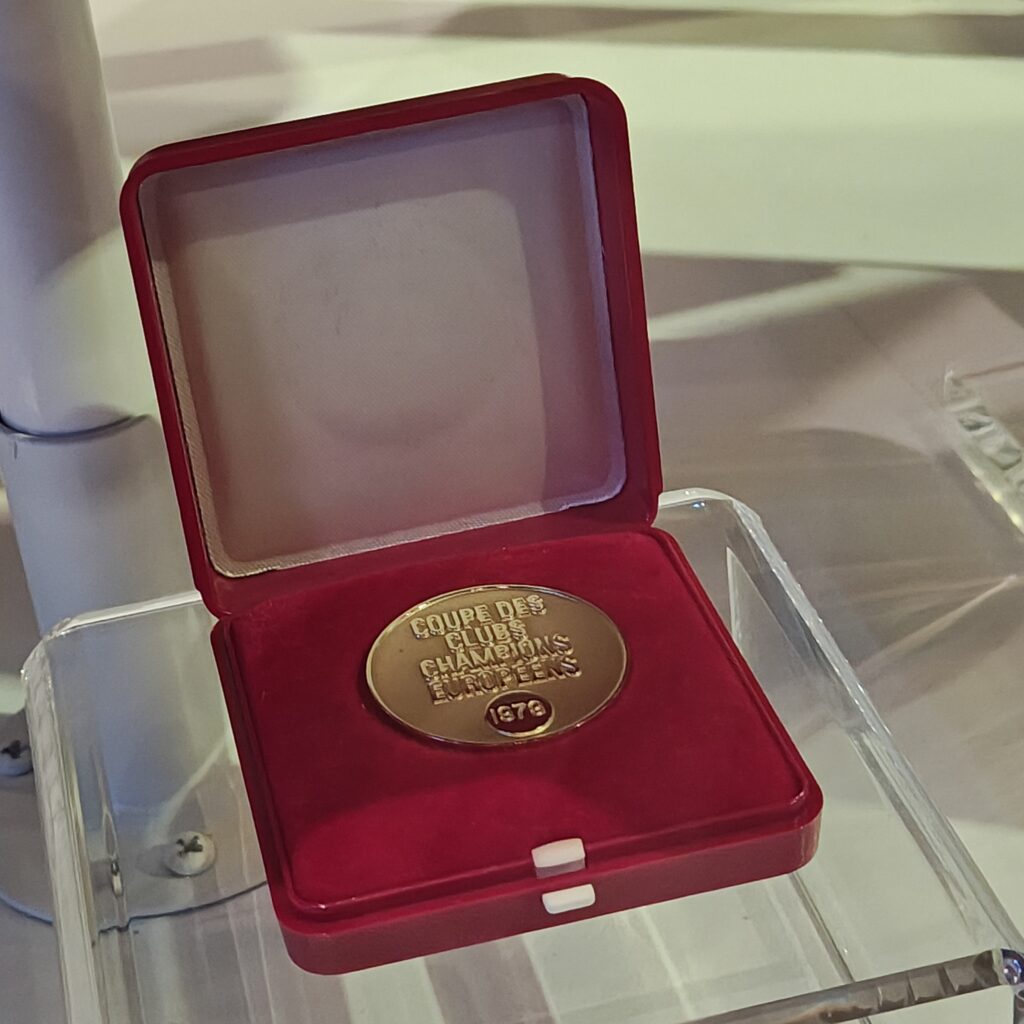
Nottingham Forest and Malmo FF meet again in the Europa League this season, but were first aquainted with one another 46 years ago – in the European Cup final. How did two teams reach the showpiece in a competition dominated by the continent’s biggest clubs?
In 1977, Nottingham Forest were a promising Second Division side that looked to be going places under brash young manager Brian Clough. They finished that campaign in third, earning promotion back to the top flight. Within a year, the East Midlands club was celebrating a remarkable First Division title – the first and to date only in Forest’s history – beating the mighty Liverpool to top spot by seven points.
This granted Forest entry to the European Cup. In those days, only the winners of each league could enter, with the only exception being made for incumbent European champions who weren’t also domestic champions. Liverpool were the 1977 European Cup victors, and as luck would have it, the two English sides would be drawn together in the very first round.
Forest won the tie 2-0 over two legs, and would go on to comfortably dispatch Greek champions AEK Athens and Swiss table-toppers Grasshoppers to reach the semis. The games against FC Koln were a far closer affair: Koln looked to have the upper hand, having salvaged a late 3-3 draw at the City Ground, but a solitary goal from Ian Bowyer at the Mungersdorfer Stadium saw Forest progress to the final.
There, they would meet the most unlkely opposition. Across the seventies, Malmo were one of the dominant forces of Swedish football, but were relative minnows compared to the likes of Milan, Bayern Munich and Real Madrid. In fact, the Blue Ones had never made it beyond the Second Round of European competition.
Like Forest, the Sweidsh champions had to overcome a tough hurdle at the very start of their European campaign, a stern defensive performance helping them upset French champions Monaco. A similarly impressive rearguard action saw them progress to the quarters at the expense of a strong Dynamo Kyiv side, before a 4-1 home win against Wisla Krakow proved enough to guarantee a semi-final berth.
Only Austria Wien stood between Malmo and a jaw-dropping final. After a goalless draw in Vienna, a goal from forward Tommy Hansson proved enough to send the Swedes to their first ever continental final.
The First Division and Allsvenskan champions met at the Olimpiastadion in May. Malmo’s fairytale run was jeopardised by injuries to key players – Bo Larsson and Roy Andersson would miss out, while captain Staffan Tapper broke his toe on the eve of the final. Forest could only name the injured Martin O’Neill on the bench, but could rely on an otherwise strong squad – so strong, in fact, that Archie Gemmill didn’t feature in the starting eleven.
Instead, Clough selected £1 million player Trevor Francis – only signed in February – to play out of position on the right wing. As fate would have it, Francis scored the only goal in a rather mediocre final, one perhaps remembered more for its unlikely participants than its quality. Gemmill never got on the pitch that evening, and never wore the Forest shirt again.
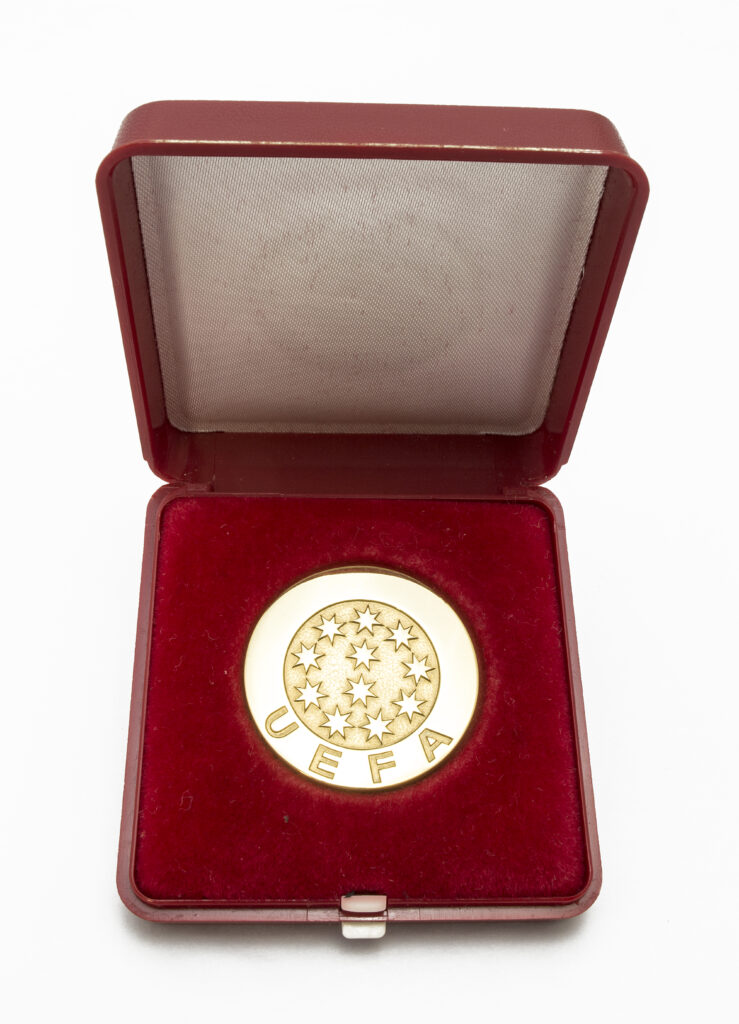
The medal shown above belongs to Viv Anderson, Forest’s rock-solid right-back. Viv had been an integral part of the side throughout the campaign, and played the full ninety in Germany. He would collect another winner’s medal the following year, as Forest defeated the much-fancied Hamburger SV by the same narrow scoreline.
With that first triumph, Viv became the first Black British footballer to win the European Cup: a feat only repeated twenty years later by Andrew Cole in the 1999 final.